Freya Ludwig · 17 September 2026
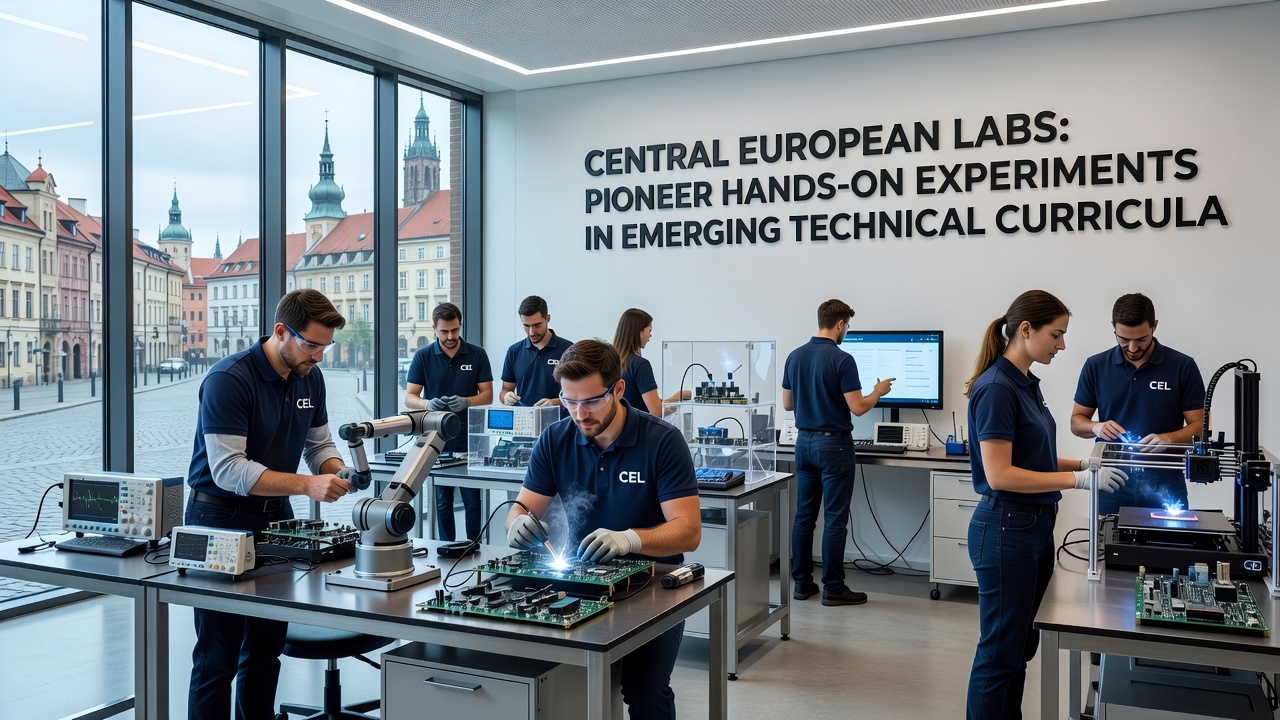
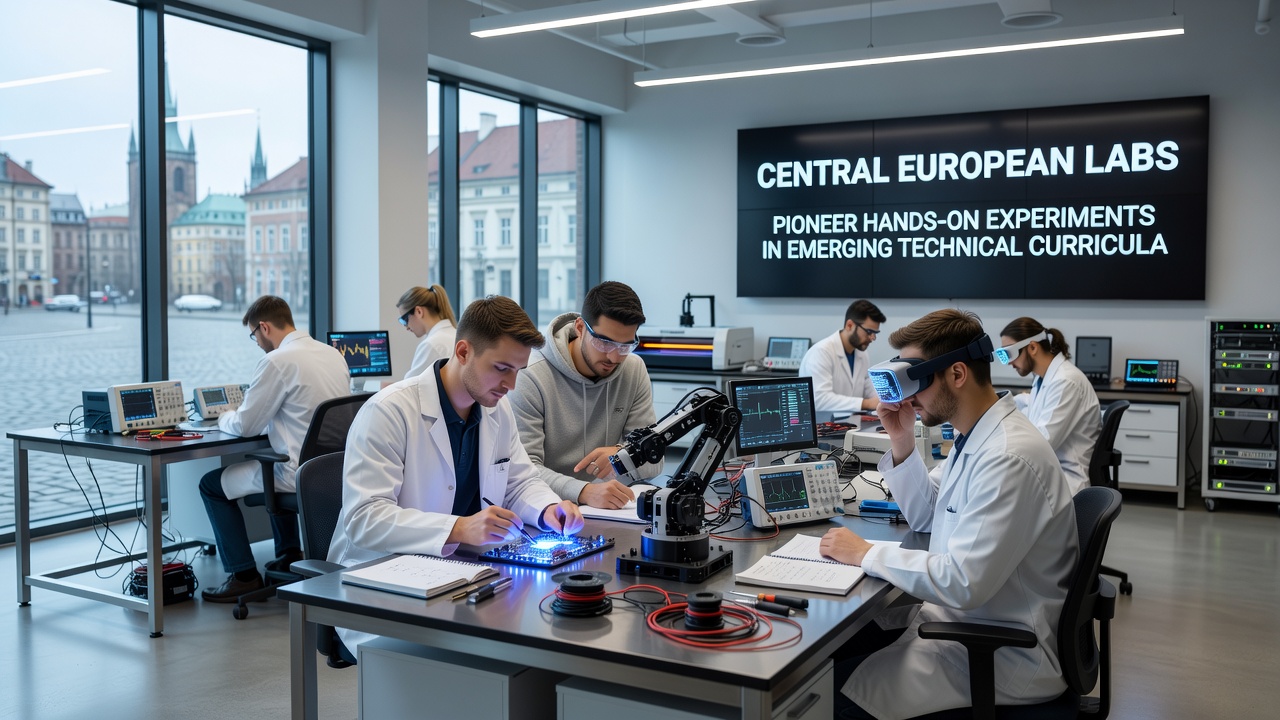
Central European Labs Pioneer Hands-On Experiments in Emerging Technical Curricula
Central European institutions have expanded laboratory-based programs that integrate practical experiments into curricula covering artificial intelligence, biotechnology, and sustainable materials science, and these initiatives draw from collaborations across the Czech Republic, Hungary, Austria, and Slovakia. Universities in Prague and Budapest established dedicated facilities in 2024 where students perform iterative testing on machine learning models alongside live cell cultures, while Viennese centers added modules on quantum sensor calibration that require direct equipment handling rather than simulation alone.
Expansion of Regional Laboratory Networks
Networks connecting technical universities across four countries began sharing protocols for hands-on modules in 2023, and this coordination produced standardized experiment kits for topics such as neural network training on edge devices and polymer synthesis under variable environmental conditions. Data collected by the European Commission education directorate shows enrollment in these programs rose 34 percent between 2023 and 2025, with participating labs reporting completion rates above 82 percent for multi-week project sequences. Institutions in Bratislava introduced a robotics assembly track that pairs mechanical design with real-time sensor feedback loops, and students there document each iteration through shared digital logs accessible to partner labs in neighboring countries.
September 2026 Milestones and Program Launches
September 2026 marks the scheduled rollout of a joint certification framework that recognizes completed experiment portfolios across borders, and planners expect the first cohort of 180 students to receive credentials validated by all four national accreditation bodies. Workshops scheduled for that month will focus on biosafety protocols for gene-editing experiments conducted at undergraduate level, while parallel sessions cover ethical data annotation practices for large language model development. Observers note that these events build on earlier pilot runs conducted in 2025, where teams from three universities tested shared equipment scheduling systems that reduced idle time by 41 percent according to internal usage logs.
Researchers at one Prague facility documented how hands-on exposure to microfluidic chip fabrication improved student retention in advanced engineering tracks compared with lecture-only cohorts, and similar patterns appeared in Hungarian data tracking biotechnology lab participants. External partners from industry supplied consumables and calibration standards, which allowed programs to maintain experiment throughput without increasing per-student costs beyond baseline figures reported in 2022.
Integration of Emerging Technologies into Curricula
Curriculum designers incorporated modules on additive manufacturing of functional electronics and on real-time environmental monitoring networks, and these additions required labs to maintain updated safety certifications plus equipment maintenance schedules. A 2025 survey conducted by the OECD education unit recorded that 67 percent of surveyed Central European technical programs now require at least one semester of documented bench work before graduation, up from 49 percent in 2021. Faculty teams developed assessment rubrics that evaluate both experimental outcomes and process documentation, and peer review across institutions helps maintain consistency in grading standards.
Programs in Vienna added experiments involving superconducting material characterization at cryogenic temperatures, whereas Slovakian partners concentrated on soil microbiome analysis tied to agricultural sensor networks. Cross-border exchanges allow students to complete portions of their required experiments at partner sites when local equipment schedules reach capacity, and digital platforms track credit transfers automatically. Industry reports from the German Fraunhofer Society indicate that graduates from these hands-on tracks enter research assistant positions at higher rates than peers from traditional programs, though exact placement statistics vary by field and year.
Challenges in Scaling Hands-On Technical Education
Scaling these laboratory experiences faces constraints related to equipment availability and instructor training, and regional coordinators address supply bottlenecks through pooled purchasing agreements that cover multiple universities. Training workshops for new lab instructors occur twice annually, and participant feedback guides adjustments to experiment complexity so that core learning objectives remain achievable within standard semester timelines. Funding from national research agencies supports equipment upgrades, while private sector contributions provide specialized reagents and software licenses.
One study released by the Austrian Institute of Technology in 2025 tracked 240 students across two cohorts and found measurable gains in practical problem-solving scores after completing sequenced experiment modules, and those gains persisted through follow-up assessments six months later. Coordinators continue to refine safety training modules to accommodate newer experimental techniques such as CRISPR-based gene drives and high-throughput screening assays.
Conclusion
Central European laboratory networks continue to refine hands-on components within emerging technical curricula through shared protocols, scheduled equipment access, and cross-border certification mechanisms. September 2026 represents a key checkpoint for the joint framework rollout, after which participating institutions will evaluate outcomes and adjust module content based on aggregated performance data. Ongoing measurement of enrollment trends, completion rates, and post-graduation placement figures provides the factual basis for further program development across the region.