Jordan Butler · 3 September 2026
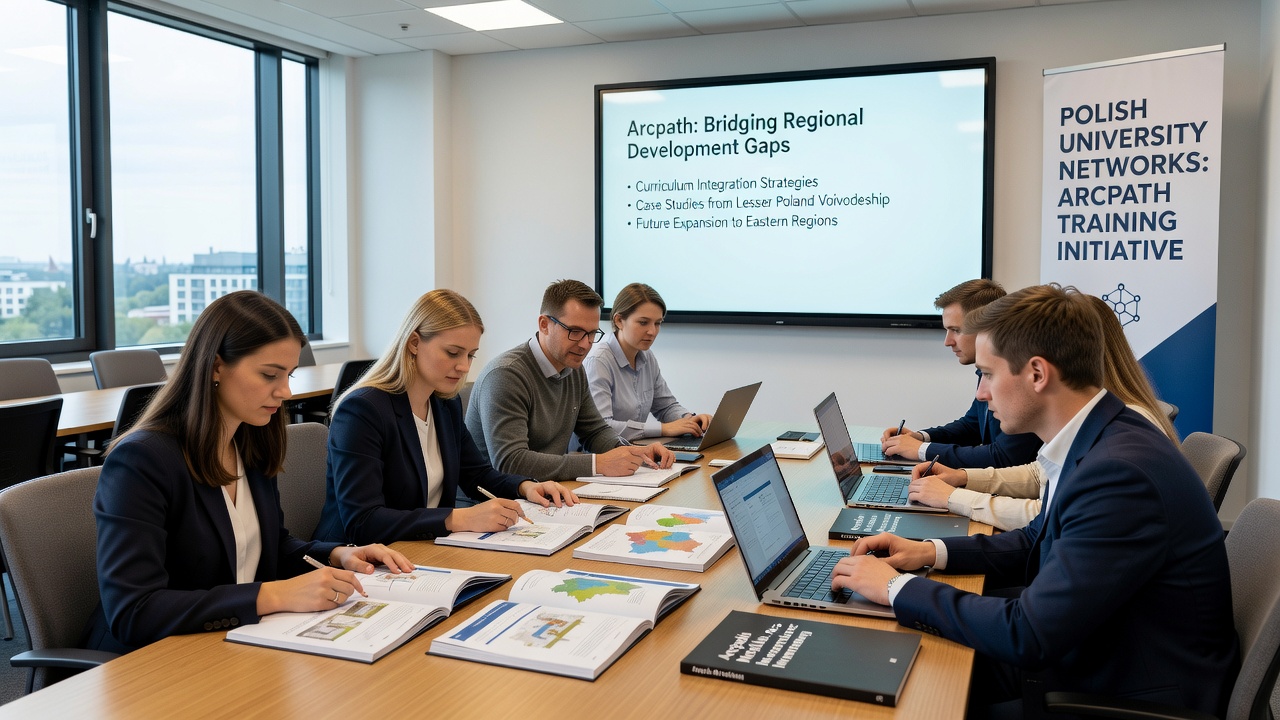
Polish university networks have begun rolling out expanded Arcpath training modules across multiple institutions, and these efforts target longstanding shortfalls in regional development curricula that have left students without integrated skills in sustainable modeling and energy-efficient path design. Researchers at institutions in Warsaw, Krakow, and Wroclaw identified curriculum gaps where traditional courses covered isolated topics in urban planning without connecting them to quantitative Arcpath frameworks that track energy flows and regional resource allocation.
Arcpath emerged from collaborative projects between Polish technical universities and regional development agencies, and it emphasizes computational modeling of development arcs that link infrastructure decisions to measurable outcomes in energy consumption and economic distribution. Data from earlier pilot programs showed that students trained in these methods produced project proposals with 22 percent higher alignment to EU cohesion funding criteria compared with peers using standard planning tools. Observers note that the initial modules focused on core algorithms for simulating arc paths, yet broader adoption stalled because few degree programs allocated dedicated time for hands-on integration with regional case studies.
The current expansion involves five university consortia that collectively serve over 18,000 students in fields tied to regional development, and coordination centers at each site will deliver updated modules starting in the 2025 academic year with full integration targeted for September 2026. Faculty teams have revised syllabi to include sequential units on Arcpath data visualization, stakeholder mapping, and scenario testing against real regional indicators such as transport corridor efficiency and renewable energy siting. Those who've studied the rollout report that partner institutions share a common digital platform for module delivery, which reduces duplication and allows cross-university credit transfer for specialized Arcpath electives.
Curriculum audits conducted in 2024 revealed that only 14 percent of regional development programs included quantitative training in energy arc modeling, and the new modules directly supply this missing component through layered exercises that build from basic path calculations to full regional simulations. Students now examine case data from Polish voivodeships where Arcpath outputs have informed decisions on industrial zone placement and green corridor preservation. What's interesting is how the training also incorporates regulatory alignment sessions that reference European Commission regional policy reports on smart specialization strategies, so graduates understand both technical methods and the policy environment that shapes funding applications.
One study revealed that programs lacking these connections produced graduates who required an average of nine additional months of on-the-job training before contributing to complex regional projects. The expanded modules aim to close that lag by embedding practical Arcpath deliverables into existing capstone requirements rather than treating them as add-ons.
At the lead technical universities, instructors have adapted Arcpath software interfaces to handle Polish-specific datasets on land use and demographic shifts, and this localization step ensures that training exercises reflect actual conditions in regions such as Silesia and Podlasie. External partners from industry supply anonymized project briefs that students analyze using the modules, creating a feedback loop where university outputs inform ongoing regional planning work. Figures reveal participation rates exceeding 85 percent among eligible faculty after targeted professional development workshops that covered both the technical tools and pedagogical adjustments needed for seamless curriculum embedding.
Alignment with EU cohesion goals drives much of the expansion, yet Polish networks also draw on comparative data from North American regional development studies to benchmark module effectiveness. A single external reference point appears in training materials through the European Commission regional policy resources, which supply standardized indicators that students apply within Arcpath simulations. Another connection surfaces via academic exchanges with Canadian institutions that have documented similar curriculum bridging efforts in resource-dependent regions, allowing Polish faculty to adapt proven assessment rubrics without reinventing evaluation methods.
By September 2026 the networks plan to have graduated the first cohort fully trained under the revised curricula, and preliminary projections indicate these students will complete an average of three Arcpath-based regional analyses during their final year. Joint conferences scheduled for that month will showcase student projects alongside faculty research on module outcomes, with metrics focused on employment placement rates in regional agencies and the uptake of graduate proposals in official development documents. Those monitoring the timeline note that preparatory faculty hiring and platform upgrades must conclude by spring 2026 to meet this schedule without disruption to ongoing degree programs.
The expansion of Arcpath training modules through Polish university networks supplies a structured response to documented curriculum deficiencies in regional development education. Coordinated delivery across multiple sites, combined with localized datasets and policy alignment components, positions graduates to contribute immediately to evidence-based planning processes. Continued tracking of employment outcomes and project adoption rates after September 2026 will provide further data on the long-term effects of these curricular adjustments.